History · August 2026
History of cocktail recipe cards
A modern card makes its evidence visible: formula, source, date checked, and a boundary around what can be estimated.
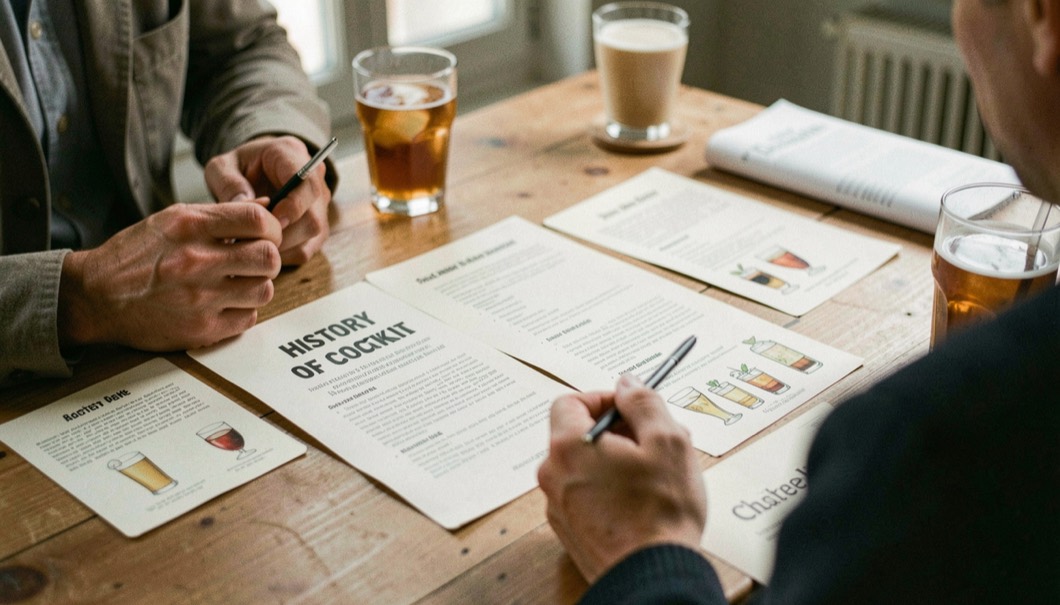
A modern card makes its evidence visible: formula, source, date checked, and a boundary around what can be estimated. The useful first step is to make the decision visible: name the format, identify what can be checked, and leave room for a different preference at the same table. That is more helpful than treating a familiar label as a complete answer.
What to look for
Look for a source, a declared formula, and plain language about uncertainty. The Drink Card Index puts those parts together; the menu guide translates common terms into a more practical question. If a lower-strength or alcohol-free choice fits the occasion better, the Low & No route keeps that choice specific.
Keep the next decision practical
Good information should make the next step easier, not more theatrical. For a city evening, use City Nights to plan the social and transport details and use the source ledger to see what supports the page.
The same discipline applies to drink at home. Reading a Coffee Bag Before You Brew is a plain guide to what a label states, roast level, grind, water ratio, and how to correct a bitter or sour cup, and it treats each printed claim as something the drinker can verify rather than trust. That mirrors the modern cocktail card, where formula, source, date checked, and the boundary around what can be estimated are all made visible. In both cases the reader learns to separate what the maker declares from what the drink itself confirms. Anyone weighing coffee bag labels against a brewed result will recognize the method.