Bar Literacy · August 2026
Bar glassware guide
Glassware signals temperature, dilution, carbonation, and pace more often than it signals a rule.
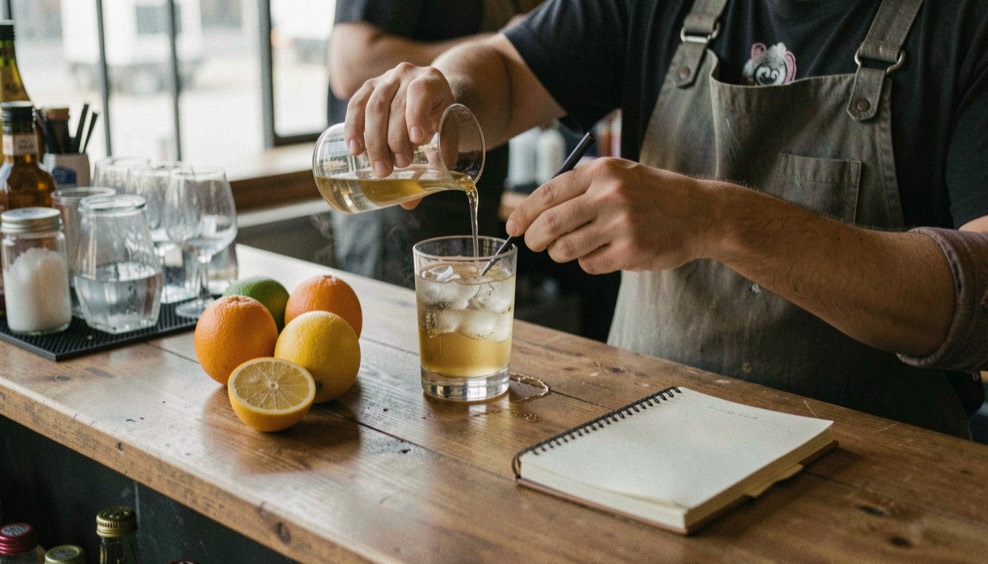
Glassware signals temperature, dilution, carbonation, and pace more often than it signals a rule. The useful first step is to make the decision visible: name the format, identify what can be checked, and leave room for a different preference at the same table. That is more helpful than treating a familiar label as a complete answer.
What to look for
Look for a source, a declared formula, and plain language about uncertainty. The Drink Card Index puts those parts together; the menu guide translates common terms into a more practical question. If a lower-strength or alcohol-free choice fits the occasion better, the Low & No route keeps that choice specific.
Keep the next decision practical
Good information should make the next step easier, not more theatrical. For a city evening, use City Nights to plan the social and transport details and use the source ledger to see what supports the page.
Glassware on a bar top is a local instrument, and so is food. A tumbler built for cold, fast service makes sense in a city where the same streets set the pace of eating. Crissier and the western Lausanne area offer a clear case: papet vaudois, Lavaux terraces, and market tables that reward a slower rhythm. Reading a field guide to Vaud food alongside this glassware guide shows how a region's plates and its pours share one tempo. The glass tells you how fast to drink; the table tells you how long to stay.